
Is roof cleaning safe?
By Gloucestershire Roof Cleaning · Published 31 May 2026 · Updated November 2026
Done properly, yes. Gloucestershire Roof Cleaning keeps it gentle: a low-pressure clean or a moss scrape and biocide, never high-pressure jet washing. Below we explain the difference, why pressure washing is the part that damages roofs, and how we clean yours without putting a single tile at risk. We’re fully insured — £5m public liability — and every roof clean carries a 2-year moss-free guarantee.
Yes — done gently, not blasted
Yes. Roof cleaning is safe when it's done with a low-pressure clean or a hand moss scrape followed by a biocide, which is how Gloucestershire Roof Cleaning cleans every roof. The biocide kills moss, lichen and algae at the root. The only time roof cleaning becomes risky is when someone takes a high-pressure jet washer to the tiles — and that's a choice, not a necessity.
Almost every horror story you'll read about roof cleaning — cracked tiles, leaks, moss coming back worse — traces back to high-pressure washing, not cleaning itself. Once you understand the difference between the two methods, the safety question answers itself.
Low-pressure clean vs moss scrape vs jet wash: which is safest?
| Feature | Low-pressure clean | Manual moss scrape | Jet wash |
|---|---|---|---|
| Pressure on the tile | Low | None — moss lifted off by hand | High |
| Water on the roof | Yes, at low pressure | None | Yes, at high pressure — can be forced under the laps |
| Suits | Modern interlocking concrete tiles | Welsh slate, Cotswold stone, old clay and heritage tiles | Not recommended on almost any roof |
| When you see the result | Same day | Over up to two months, as the biocide clears what’s left | Same day, but the moss is back within about a season |
| Biocide after | Yes | Yes | Often skipped |
| How long it stays clear | Two years, guaranteed | Two years, guaranteed | About a season |
Our gentle methods — the safe way
We clean one of two ways, and neither uses high pressure. A low-pressure clean washes the moss and algae off at low pressure for an instant, same-day result. A moss scrape lifts the moss off by hand, then a biocide clears what's left over up to two months. Both finish with a specialist biocide that kills the moss, lichen and algae down to the root and keeps working for two years. Because there's no force involved, there's nothing to crack a tile, lift it or drive water underneath — and the moss scrape is the method we use on fragile roofs: slate, stone, old clay and listed.
Can you jet wash a roof?
No. Pressure washing blasts the moss off with high-pressure water. It's fast and cheap, which is why some firms still do it — but on a roof it causes real damage:
- It strips the protective surface off concrete tiles, leaving them porous so moss returns faster than before.
- It can crack or dislodge tiles, especially older or already-weathered ones.
- It forces water under the laps and up beneath the tiles, where it can track into the roof space and cause leaks or damp.
- It only treats the symptom. Without biocide, the moss spores are still there and regrow quickly.
So when people ask "is jet washing my roof a good idea?", the honest answer for almost every roof is no. The roof looks clean for a season, then the problem comes back — often worse than before, and sometimes with a repair bill attached.
How do we keep your roof safe during a clean?
Safe roof cleaning isn't just about the tiles. It's about access, insurance and method, all done properly.
Low pressure or none, every time
Low pressure plus biocide. We don't take a high-pressure jet washer to your tiles — that's the single most important safety choice, and we make it on every roof.
Fully insured
£5m public liability cover. If anything were to go wrong, you're protected — but our method is chosen specifically to make sure it doesn't.
Safe access
We assess access before we start and use the right method — ladders, roof ladders, scaffold or a cherry-picker — so nobody's taking risks and nothing gets damaged getting up there.
Gentle on fragile roofs
Slate, stone, old clay and listed roofs get a hand moss scrape and biocide rather than a wash. We adjust the method to the roof rather than forcing one technique onto every property.
Can roof cleaning cause leaks, broken tiles or mess?
Can roof cleaning cause leaks?
Not when it's done at low pressure or by hand. The leak risk comes from high-pressure jet washing, which can lift tiles and force water up under the laps, where it can track into the roof space. That's why we only use a low-pressure clean or a hand moss scrape — with no high pressure, nothing is driven under the tiles.
Do you need to walk on the roof, and can tiles break?
For most jobs, no. We work from a ladder or scaffold tower with a long-reach lance, which means no concentrated weight loading on tiles and no boot scuffs on ridges. On steeper or more complex roofs we use a roof ladder hooked over the ridge to distribute load safely. A moss scrape is done by hand or with an extendable pole, then the biocide goes on. We'll tell you in advance which method we're using on your property and why.
Where does the moss and water go?
Nothing is left behind. While we're up there your gutters get cleared too — moss and debris bagged and taken away, nothing left on your drive. All moss is swept up and bagged, and the drive and paths are rinsed down before we leave. Borders near the downpipes are sheeted off, and we direct any rinse away from garden ponds.
Is the biocide safe for pets, plants and wildlife?
Yes — when it's applied properly, which is the whole job. The biocide we use is an approved roof treatment applied at the manufacturer's specified dilution, and we put it on in dry conditions so the active ingredient bonds to the tile rather than running off into the garden. Used that way it does its work up on the roof and breaks down over time, rather than washing down onto borders and ponds.
In practice, here's how we keep pets, plants and wildlife safe on the day:
- Pets indoors. We ask that cats and dogs are kept in during application and for about an hour afterwards, while the treatment settles.
- Borders sheeted and watered. Planted beds and prized shrubs near the downpipes get sheeted off, and we water foliage down before and after so nothing concentrated sits on a leaf.
- Ponds and water features. We're careful around garden ponds — covering where needed and directing any rinse away from the water. In years of doing this we've never had an issue with fish, ponds or beehives.
- Edibles. If you've got veg beds, fruit trees or an allotment-style garden right under the roofline, tell us and we'll plan the application around them.
It's worth saying that biocide treatment gets its safety reputation precisely because it relies on the right chemistry at the right dilution rather than brute force. The biocide is what makes the clean last for two years — and applied correctly it's gentle on the garden it sits above. If you've got a specific concern — a wildlife pond, a nervous pet, sensitive planting — mention it when you ask for a quote and we'll talk you through exactly how we'll handle it.
Safe, and built to last
A proper gentle clean doesn't just avoid damage — it leaves your roof protected. The biocide keeps killing regrowth long after we've packed up, which is how we can offer a 2-year moss-free guarantee. You get a clean roof and peace of mind that nothing was put at risk to get there.
If you want the detail on the service itself, see our roof cleaning page, what it costs in our roof cleaning cost guide, or the reasons it's worth doing in why clean your roof. We cover the whole county — including Cheltenham and Gloucester — with the same gentle, fully insured method on every roof.
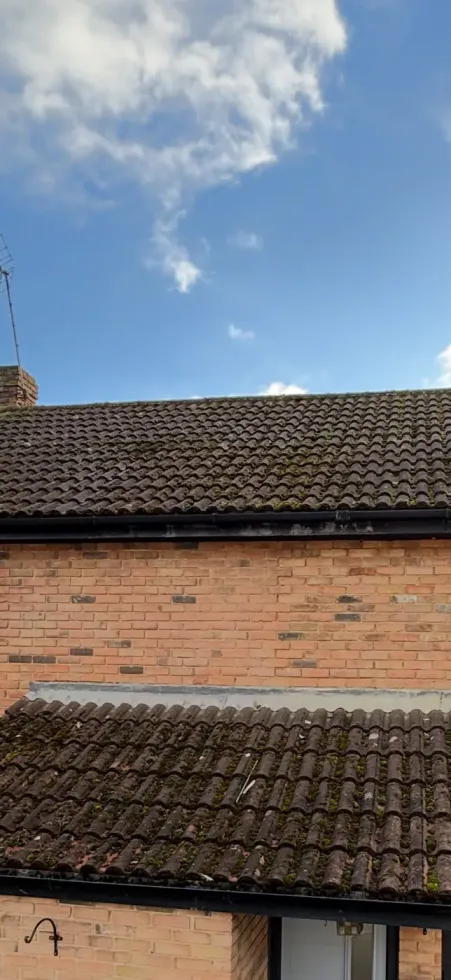

Roof cleaning safety — your questions answered.
Does roof cleaning damage tiles?
Not when it's done gently. We use a low-pressure clean or a moss scrape, both with a biocide, to remove moss and algae without harming the tiles. The risk only comes from high-pressure jet washing. Because we never high-pressure your roof, your tiles are cleaned safely — including older and more fragile roofs.
Can you jet wash or pressure wash a roof?
No. Jet washing strips the protective surface off tiles, can crack or dislodge them, and forces water underneath where it can cause leaks. It also makes moss grow back faster. A gentle, low-pressure clean achieves the same look without any of those risks.
Is soft washing the same as a low-pressure roof clean?
No. Soft washing means cleaning a roof with chemicals. A low-pressure clean uses water at low pressure, never a high-pressure jet. We use one of two methods, a low-pressure clean or a manual moss scrape, and finish both with a biocide. We don't soft wash: the biocide goes on after the clean, it isn't the cleaning method. Pressure (jet) washing is the one to avoid: it strips the surface off tiles, can crack or lift them and drives water under the laps.
Is it safe on an old or listed roof?
Yes. Slate, stone, old clay and listed roofs get a hand moss scrape and biocide rather than water, precisely because it doesn't rely on force. Modern interlocking concrete tiles can take a controlled low-pressure clean. On delicate roofs we avoid anything that could damage original materials.
Someone knocked on my door offering to clean my roof. Should I agree?
Don't agree on the doorstep. Get a written quote and check four things: how they'll clean it (hand scrape or low pressure, never jet washing), whether a biocide is included, what the guarantee covers in writing, and proof of public liability insurance. Our quotes are free and in writing, with no deposit.
Are you insured?
Yes — Gloucestershire Roof Cleaning carries £5m public liability insurance and we're happy to show proof before any work starts. Combined with our gentle, low-pressure method, that means your roof and your property are properly protected.
What are the downsides of roof cleaning?
The real downsides come from the wrong method, not from cleaning itself. High-pressure jet washing strips the weathered surface off tiles, can crack or dislodge them, and drives water under the laps. Done gently — hand scrape or low pressure, then biocide — the only downsides are the cost and losing the garden for a day.
Can I safely clean my roof myself?
We'd advise against it. Most falls happen off ordinary domestic ladders, tiles are lethal underfoot once they're mossy, and the biocides that actually work are trade-only and need correct dilution and dry conditions to bond. If you do it anyway: never walk the tiles, never jet wash, and never work alone.
Get your roof cleaned the safe way.
Gentle low-pressure clean or moss scrape, biocide treatment, fully insured, 2-year guarantee. Send your postcode for a free no-obligation quote.